




So How do Sounds get Assigned Color?
We’ve all heard of “white noise”, the radio static that drowns out distraction and helps calm the mind. But have you heard of pink noise? Or brown noise? Or even blue noise? To understand these different types of sonic environments, we have to review the terms used to examine noise.
Brand names include Zone, Velo, Rogue, Zyn, Lucy, On!, Juice Head, and White Fox. The nicotine is often mixed with minty essence, but is also available in kid-friendly flavors like watermelon, dragonfruit, berry, grape, and apple. See photos below:

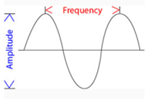
Frequency defines how fast a sound wave moves, with 1 hertz (Hz) equal to one cycle per second. 50-250 Hz is perceived as low-frequency sound. These include noises like thunder and car engines. Mid-range sound, in the 250-2,000 Hz range, includes human speech and music. High-pitched sounds are heard in the 2,000-20,000 Hz range and contain noises like a whistle or a police siren.
Faster frequencies are perceived as higher-pitched sounds. Amplitude, measured in decibels (dB), determines the volume of the sound. Larger amplitudes translate into louder sounds.
So how do sounds get assigned color? Similar to the spectrum of light, where the color white includes all wavelengths and hues, white noise comprises all frequencies across the audible spectrum with equal power. Perhaps the most well-known of the background noises, white noise sounds like a radio dialed to a frequency between stations. People use white noise for help with sleeping or studying. Pink noise has louder low-frequency and softer high-frequency sounds than white noise, so it has a lower pitch. Whereas white noise is in the sound-range of a waterfall cascading with varying strengths on different surfaces, pink noise sounds more like a medium consistent rainfall. Pink noise is said to help increase concentration and reduce anxiety. Brown noise has even more emphasis on the bass tones than pink noise, and has been likened to the roar of a river current. There are claims that infants and young children sleep better with brown noise, and it is used to augment meditation. Pink and brown noise are considered “warmer” due to their lower-frequency tones that encourage calm and deep thought. Blue noise, on the other hand, contains higher-frequency sounds and is more activating than pink or brown noise. It’s no surprise that people use these “cooler” tones to help with focus and concentration, and to camouflage the high-pitched ringing in the ears of patients who suffer from tinnitus.
There are individuals with chromesthesia, the experience of perceiving sound as color, a condition that is believed to result from cross-wiring in the brain, and lends some credibility to these delineations of the sound spectrum. Regardless of what color is assigned, all continuous background noise helps to hide the jarring sound of disruptive noises (think of an early-morning garbage truck’s squeaky brakes, the “plink-plink” of a leaky sink faucet, or a neighbor’s crying baby). Sudden noises will interrupt sleep and deep concentration, but the blanket of continuous, monotonous sound in the background helps to dampen these intrusions, creating a more peaceful, tranquil, and uninterrupted auditory experience.