


You may have heard about this “explosive” story— record numbers of diarrhea cases are popping up all over the country. The culprit is a parasite called Cyclospora found in food or water that has been contaminated with feces. The incubation period (time from exposure to symptom onset) can be up to two weeks, making it difficult to trace back to any particular food that was consumed. The most notable symptom is watery diarrhea, sometimes described as explosive. Other symptoms include abdominal pain, nausea, vomiting, and bloating. Rarely, the symptoms are severe enough to warrant hospitalization for dehydration. The rate of person-to-person contagion for this particular illness is quite low due to the life cycle of the parasite. Exposure often comes from imported produce. Historically, cases have been linked to raspberries, basil, snow peas, mesclun lettuce and cilantro. The source of this summer’s increase in cases, however, has not yet been identified.

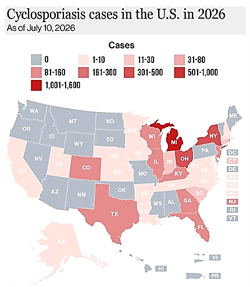
Currently in the US, cases of Cyclosporiasis have spiked in Michigan, where they are seeing 30 times as many cases as they usually do this time of year. New York, Illinois, Wisconsin, Colorado, Texas, Kentucky, Georgia, Florida, and Ohio are among the other 32 states that have recorded higher incidences this summer. Michigan and Ohio seem to be the states reporting the highest number of cases. The CDC published this color-coded map last week to illustrate where we’re seeing the most concentration of illness from Cyclospora.
Definitive diagnosis requires a stool test to identify the germ, which is not available over the counter and must be ordered by a medical practitioner. Cyclosporiasis is treated with a sulfa-based oral antibiotic known as Bactrim or Septra. To protect yourself from this gastrointestinal parasite, be sure to wash your fruits and vegetables well before eating, keep your produce refrigerated, and cut away any bruised or damaged pieces before ingesting. Other precautions include using frozen or canned, not fresh, berries and peeling your produce before eating it. Heating your fruits or veggies to a minimum of 158°F will kill the Cyclospora germ. While not all fruits and veggies taste better warm, greens like spinach, kale, and chard can be steamed or sauteed, and berries can be cooked down to jam or baked into a pie or torte.
Eating your vegetables is still a healthy choice! If you find yourself with loose stools and worry that you might have contracted Cyclosporiasis, talk to your health care professional about next steps.